Unlock Your Driving Test Success: The Secrets of the 50% Who Pass and How to Join Them!
Introduction: The UK Driving Test – A Shifting Landscape
The UK driving test has long been a rite of passage, often fraught with nerves and uncertainty. For years, the national pass rate hovered stubbornly below 50%. However, recent data from the first five months of 2026 reveals a significant shift: the national driving test pass rate has risen just above 50%. This is a welcome improvement over the past seven years, yet it still means that half of all tests conducted each year result in a fail.
If you’re learning to drive, this statistic presents a crucial question: what are the successful 50% doing right, and what are the other 50% missing? This blog post dives deep into the data, uncovers the common pitfalls, and, most importantly, provides a comprehensive solution to improve your chances of passing the driving test by over 65%. We’ll explore the critical roles of mindset, skills, knowledge, and the invaluable support of a truly effective driving instructor.
The Numbers Don’t Lie: A Closer Look at UK Pass Rates
The upward trend in pass rates is encouraging. Our analysis of the latest statistics shows the average pass rate for the first five months of 2026 stands at 50.57%. This compares favorably to the average pass rate of 49.43% recorded between 2019 and 2025. While this increase might seem small, it represents thousands more successful new drivers on the road. But why are so many still failing?
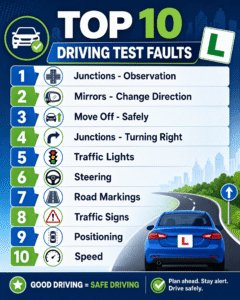
The Top 10 Reasons People Fail Their Driving Test
Understanding where others go wrong is the first step to ensuring your own success. The Driver and Vehicle Standards Agency (DVSA) meticulously records the reasons for test failures. Here are the top 10 faults that caused people to fail their driving test between April 2024 and March 2025
1. Junctions – observation
2. Mirrors – change direction
3. Move off – safely
4. Junctions – turning right
5. Response to signs – traffic lights
6. Control – steering
7. Response to signs – road markings
8. Response to signs – traffic signs
9. Positioning – normal driving
10. Use of speed
These aren’t just minor errors; they represent fundamental aspects of safe and confident driving. Many of these faults are interconnected, highlighting a need for holistic development rather than just rote learning.
The Winning Formula: What the Successful 50% Do Right

Passing your driving test isn’t just about knowing how to operate a car; it’s a combination of factors that, when aligned, dramatically increase your chances of success.
1. The Mindset Advantage: Calm, Confident, and Prepared
Nerves are a natural part of the driving test experience, but the successful 50% manage them effectively. They cultivate a growth mindset, viewing mistakes as learning opportunities rather than failures. Key elements include:
• Thorough Preparation: Confidence stems from knowing you’ve done the work. This means consistent practice in varied conditions, familiarising yourself with potential test routes, and reviewing the Highway Code .
• Stress Management: Techniques like deep breathing, visualisation, and positive self-talk can significantly reduce test day anxiety .
• Focus on Safety, and good driving techniques, Instead of focusing solely on passing, successful learners prioritise safe driving. This natural focus often leads to fewer errors.
2. Mastering Skills & Knowledge: Beyond the Basics
The top 10 faults clearly indicate areas where learners struggle. The successful 50% don’t just learn to drive; they master these critical skills:
• Superior Observation: This is paramount, especially at junctions. They actively scan, looking more than once, and avoid staring, they anticipate hazards, and understand how to react safely.
• Effective Mirror Use: Not just glancing, but consistently checking mirrors and acting safely on the information they provide, particularly when changing direction or speed. Mirrors are there for a reason.
• Precise Control: Smooth steering, proper use of foot controls, appropriate use of speed, and accurate positioning are second nature, demonstrating full command of the vehicle.
• Situational Awareness: They understand and respond correctly to all road signs, markings, and traffic lights, demonstrating a deep understanding of road rules.
3. The Power of Exceptional Instructor Support
Perhaps the most overlooked factor in driving test success is the quality of instruction. The best instructors don’t just teach you to pass, because that should be the result if they teach you to drive safely and confidently. Good instructors possess specific qualities that set them apart:
• High First-Time Pass Rates: This is a clear indicator of their effectiveness. They consistently produce test-ready drivers.
• Efficiency in Teaching: They get learners to test standard in fewer lessons, saving time and money in the long run.
• Personalised Approach: They identify individual weaknesses and tailor lessons to address them, rather than following a rigid curriculum, or driving around until it sticks.
• Patience and Encouragement: They create a supportive learning environment where mistakes are opportunities for growth, not criticism .
• Deep Route Knowledge: While examiners vary test routes, experienced instructors often have extensive knowledge of local hot spot areas, helping learners practice in many different environments and conditions.
The Investment in Excellence: What to Pay for a Top Instructor
Given that the average driving lesson price is around £45 per hour, what should a learner be willing to pay for an instructor who consistently gets learners to test standard in fewer hours and boasts a high first-time pass rate?
Consider the true cost of learning to drive. If an instructor charging £45 requires on average 60 hours of lessons to get pupils to a safe and competent standard = £2,700. A top instructor, who might charge £55 per hour, could get you to a higher standard in just 40 hours, saving you over £500 and a lot of time.
Therefore investing in a top-tier instructor, even at a higher hourly rate, can lead to significant overall savings due to fewer lessons and a higher likelihood of passing on the first attempt. The value isn’t just in the money saved, but in the reduced stress, faster qualification, and the superior driving skills you acquire for life.
Your Path to a 65%+ Pass Rate: Actionable Steps
To significantly boost your chances of passing by over 65%, combine these strategies:
1.Choose Your Instructor Wisely: Don’t just pick the cheapest. Research instructors’ pass rates, read reviews, and ask about their teaching philosophy. Prioritise those known for efficiency and high first-time passes.
2.Practice Deliberately: You’re learning a skill for life, the more you understand the better you become. Ask your instructors to give you scenarios to help you master junctions, mirror use, and vehicle control.
3.Cultivate a Test-Ready Mindset: Practice mindfulness, visualise success, and approach each lesson and the test itself with a calm, focused attitude.
4.Supplement Lessons with Independent Practice: If possible and legal, practice with a supervising driver in varied conditions to reinforce what you learn in lessons.
5.Understand the ‘Why’: Don’t just memorise rules; understand the safety principles behind them. This deeper knowledge will help you adapt to unexpected situations.
The rising pass rates in 2026 are a testament to evolving learning methods and dedicated instructors. By understanding the common pitfalls and adopting the strategies of successful learners – a strong mindset, honed skills, comprehensive knowledge, and the guidance of an exceptional instructor – you can confidently aim for a first-time pass. Your investment in quality instruction is an investment in your future safety and freedom on the road.
Don’t just aim to pass; aim to excel.