
How Many Driving Lessons Do I Need?
There is no legal minimum number of driving lessons you must complete before taking your practical driving test.
The number you need will depend on your previous experience, confidence, lesson frequency, private practice and how quickly you learn to drive safely without help. GOV.UK confirms that there is no minimum number of lessons or practice hours required.
As a general budgeting guide, you will often see estimates of approximately 45 hours of professional driving lessons plus around 22 hours of private practice. This is not a requirement, target or guarantee. Some learners need fewer hours, while others need considerably more. A recently updated RAC guide continues to use this commonly quoted estimate.
At Elite, our advice is straightforward:
Do not judge your progress only by the number of lessons you have taken. Judge it by what you can do safely, independently and consistently.
The quick answer
- There is no minimum number of lessons.
- No responsible instructor can guarantee the exact number of lessons even after seeing you drive.
- Most beginners should budget for several dozen hours rather than expect to pass after a very short course.
- Regular lessons and suitable private practice can help you build experience.
- You should take your test when you can drive safely without support from your instructor—not when you reach an arbitrary number of hours.
How many driving lessons does the average learner need?
This is a commonly asked question because learners and parents want to know how long it will take to learn, and the cost of the lessons so that they can budget for them.
An average can help you prepare a budget, but it cannot tell you exactly how long you will take.
There are so many different figures quoted by businesses on the internet, starting at 25 hours for a learner with existing experience to 50 hours for a novice
Two learners of the same age, starting at the same time, can progress very differently. One may quickly understand car control but need more time developing observation and planning. Another may be confident in traffic but need additional help with coordination, judgement or unfamiliar roads.
You may need fewer lessons than the commonly quoted average when you:
- Take regular weekly lessons without gaps.
- Private Practice safely between lessons following your instructor’s recommendation.
- Reflect on feedback and ask questions of your instructor to help you improve.
- Study your theory alongside your practical training.
- Arrive rested and ready to learn, tiredness can affect your concentration..
- Have previous driving experience, and reasonable driving knowledge
- Fully participate in lessons by offering suggestions, and giving constructive feedback to your instructor.
Why can’t a driving instructor give me an exact number?
An instructor cannot predict how many lessons you will need during a telephone call or from your age alone.
Even on a first lesson or assessment they still might not be able to provide an initial estimate: Assessments are based on the following skills and knowledge level.
Your current controls skills.
Observation and awareness.
Planning and judgement.
Confidence in different traffic situations.
Following signs and markings
A professional instructor should explain what you are doing well, which skills still require development and why additional practice may be necessary. Therefore they may be able to give you a reasonable estimate of the amount of lessons you might need, but this could change based on how quickly you progress on each lesson.
What affects how quickly you learn to drive?
1. How regularly you take lessons
Regular lessons help maintain momentum. When there are long gaps between sessions you naturally forget some of the things you learnt, so part of the next lesson may be spent recovering skills and confidence from previous lessons.
Consistency is more valuable than taking several lessons in a week and then stopping for a long period.
2. The length of your lessons
There is no lesson duration that suits everyone. But based on customer feedback 60 minutes can feel rushed, while 120 minutes can be exhausting for some learners. A 90-minute session strikes a balance, providing enough time for comprehensive practice without overwhelming the student.
3. Private practice
Suitable private practice can help you build experience between professional lessons.
The DVSA’s Ready to Pass campaign states that learners who combine professional instruction with private practice tend to perform better in their test and become safer drivers.
4. Your confidence and nerves
Being nervous does not automatically mean that you will need a large number of lessons.
A calm, structured instructor should help you build confidence progressively rather than placing you in situations you are not ready to manage. Confidence normally develops through experience, successfully completing challenges, and by not being rushed.
5. Your understanding of driving theory
Theory is not just something you study to pass a separate test.
Understanding road signs, priorities, stopping distances, hazards and the Highway Code gives you more mental capacity to make decisions during practical lessons.
A learner who studies theory alongside practical tuition may spend less lesson time having basic rules explained in the car.
6. The quality of your learning
Simply spending time behind the wheel does not guarantee progress.
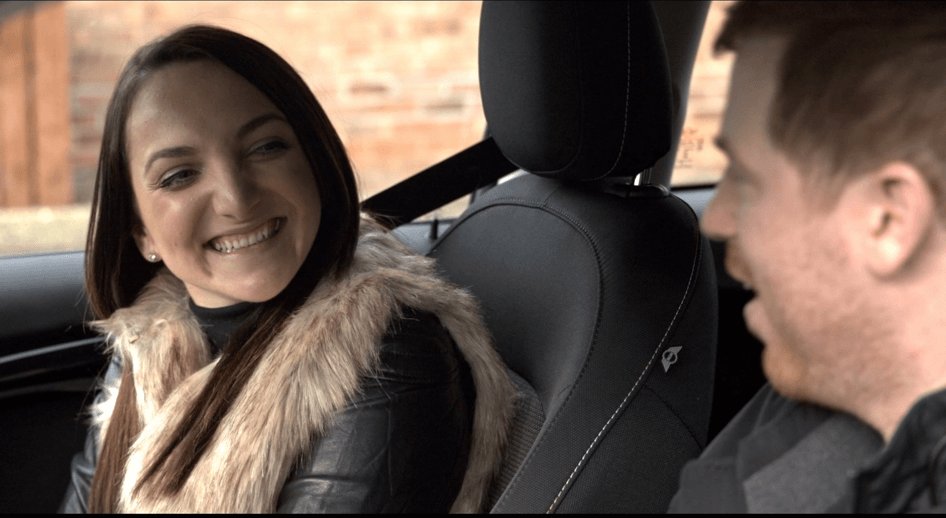
Effective lessons should have:
A clear purpose.
Goals agreed between learner and instructor.
Practice area suited to your current ability.
Useful feedback, and learning outcomes explained during practice.
Time to discuss what went well.
A plan for the next lesson.
Opportunities to take increasing responsibility.
You should understand what you are learning and why it matters.
7. Manual or automatic transmission
Some learners initially progress more quickly in an automatic car because they do not need to operate a clutch or change gears manually.
This will reduce the number of vehicle-control tasks being managed at the same time. However, automatic tuition does not remove the need to master the other controls, or what you can do safely, independently and consistently.
How should my driving progress be measured?
The DVSA guidance follows a learning syllabus contains 27 driving skills. Each of the 27 driving skills has 5 levels of progress. You’ll be ready to take your driving test when you’re consistently achieving level 5 for all 27 skills. You can learn more by visiting the DVSA ready to pass website here
These are the 5 levels of progress from the DVSA’s progress tracker.
Level 1: Introduced
You have been introduced to the skill and can follow your instructor’s guidance.
Level 2: Helped
You are developing the skill but still require assistance.
Level 3: Prompted
You can manage the skill in many situations but may still need occasional reminders, particularly somewhere unfamiliar.
Level 4: Independent
You can manage the skill confidently and consistently without help.
Level 5: Reflection
You can explain what you did, why it was important and what you would change next time. You understand how the skill makes you safer and more fuel-efficient.
This is why you shouldn’t judge your progress only by the number of lessons you have taken. Judge it by what you can do safely, independently and consistently.
The DVSA’s advice is:
You’ll usually be ready to take your driving test when:
- You do not need prompts from your driving instructor.
- You do not make serious or dangerous mistakes when you’re driving.
- You can pass mock driving tests.
- You have practised ways of managing your nerves.
- Your driving instructor agrees you are ready.
Learn more from the DVSA’s Ready to Pass
Can I pass after just 20 hours of driving lessons?
It is possible, but it would be unwise to assume that 20 hours will be enough before you start.
A learner with previous experience and frequent private practice may need fewer professional lessons. A complete beginner without private practice may need considerably more.
A driving school promising that every learner will pass within a particular number of hours is making a promise it cannot reliably support.
The Problem With “Quick Lessons” & Unrealistic Expectations
Your parents learned to drive in a different era. Roads were quieter. Traffic was lighter.
Roundabouts weren’t multi-lane nightmares. And yes, they might have passed their driving test in less than 15 lessons but the driving environment has fundamentally changed.
Your friends might claim they passed first time after just 20 lessons. But here’s the truth, those who claim low statistics often aren’t counting all their practice, or they’re being optimistic about their abilities.
Are intensive driving courses quicker?
An intensive course compresses training into a shorter period. It does not remove the need to learn the same skills or reach the same test standard.
Intensive courses can suit learners who:
Have already a good level of driving skill, and a good understanding of driving knowledge.
Can concentrate for longer periods.
Learn well through frequent repetition.
Learn well under pressure.
Are close to test standard and need structured preparation.
Before purchasing an intensive course, an assessment can help establish your current ability and the amount of training that may be realistic.
Seven ways to make better progress
1. Choose an instructor you can work with
You do not have to become best friends, but you should feel able to ask questions, make mistakes and discuss concerns.
2. Take regular lessons
Consistency helps you maintain skills and build on your previous session.
3. Agree clear lesson goals
You should know what you are working on and what successful progress looks like.
4. Study your theory
Use the Highway Code, reputable learning resources and any material recommended by your instructor.
5. Ask for specific feedback
Instead of asking, “Was that okay?”, ask:
What did I do well?
Where did I need help?
What should I focus on next time?
What can I practice safely between lessons?
6. Arrive ready to learn
Driving requires concentration. Try to avoid lessons when you are extremely tired, unwell or distracted.
7. Use suitable private practice
Ask your instructor what you should practice and keep the private sessions consistent with your current lesson plan.
Looking for driving lessons?
Elite Driving School has been helping people learn to drive since 1989.
We provide manual and automatic driving lessons with local instructors, check if we cover your area. You can also check current availability by entering your postcode and viewing suitable lesson options.
Check Driving Lesson Availability
About this guide
This guide was prepared by Elite Driving School using current GOV.UK and DVSA learner-driver guidance, together with the practical experience of instructors who teach learners at different stages of their training. Elite Driving School has provided driver training since 1989.
1 August 2022 at 14:51
Last reviewed: July 4th 2026 by Kevin Goldthorpe DVSA grade A driving instructor